The Human Side of AI: Why Shop-Floor Adoption Is Harder Than Model Building

Introduction
When you walk through a manufacturing shop floor, it is often easy to identify problems that can technically be solved using Artificial Intelligence (AI) and Machine Learning (ML). Process instability, quality variation, energy inefficiency, and delayed fault detection are common examples where data-driven models can deliver value.
However, despite technical feasibility, deploying AI/ML solutions in operational manufacturing environments remains challenging. The reasons are rarely algorithmic. Instead, they stem from human resistance, legacy practices, system integration complexity, and change management gaps.
This article shares practical insights from real manufacturing projects, highlighting why AI/ML adoption struggles on the shop floor and how effective change management both strategic and operational can bridge this gap.
Operator Resistance: The First Barrier to AI Adoption
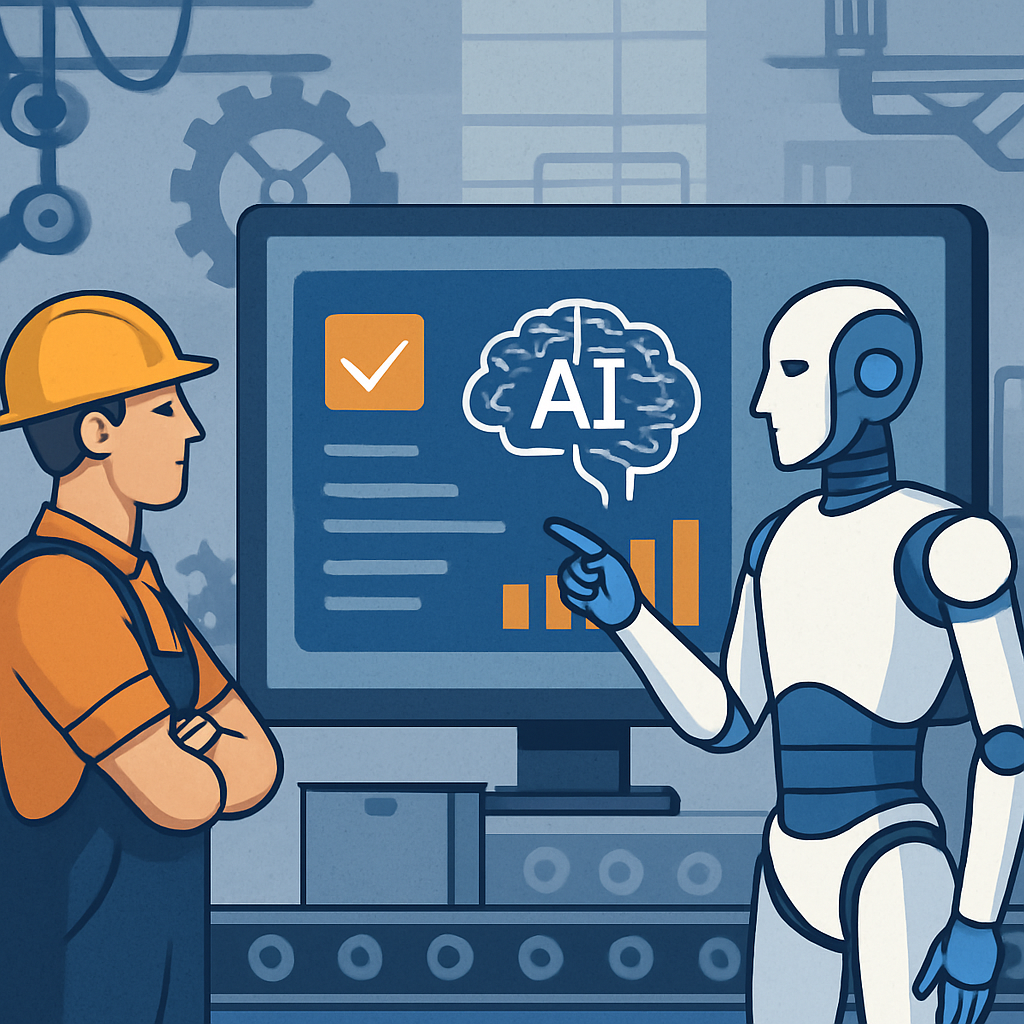
One of the earliest challenges faced during AI/ML deployment is resistance from experienced operators. Operators who have worked with legacy systems for years often feel uncomfortable with new AI-based decision-support tools.
Common perceptions include:
- Fear that AI systems will reduce their importance or threaten job security
- The belief that automation replaces human intelligence
- Distrust of systems that do not operate like traditional control logic
In reality, AI/ML solutions are designed to enhance operator capabilities, not replace them. By automating repetitive analysis and highlighting optimal actions, AI allows operators to focus on supervision, judgment, and higher-value decision-making. Unfortunately, this intent is often misunderstood during the early stages.
Legacy Practices and Subjective Decision-Making
Traditional process control relies heavily on manual decision-making based on operator experience. While experience is invaluable, it also introduces limitations:
- Decisions vary between operators
- Assessments are subjective and situation-dependent
- Complex multivariable interactions are difficult to evaluate in real time
From a process control perspective, this frequently leads to suboptimal decisions, especially in physico-chemical processes where dynamics are nonlinear and time-delayed. AI/ML systems, by contrast, analyze large datasets consistently and objectively, enabling repeatable and optimized decision-making.
Integration with Legacy Control Systems
Integrating AI/ML solutions with existing PLC, DCS, and SCADA systems is rarely straightforward. Manufacturing plants typically operate with legacy architectures that were never designed for advanced analytics.
Challenges include:
- Interface compatibility with older systems
- Real-time performance and latency constraints
- Robust and secure communication requirements
- Adherence to safety limits and interlocks
Meticulous engineering is required to ensure AI systems operate within defined safety envelopes and do not compromise plant integrity.
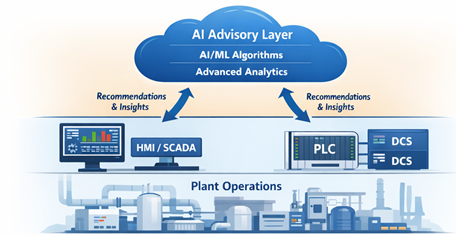
Fig 1: AI Advisory Layer Architecture Above Legacy PLC/DCS Systems
The Critical Role of Change Management
From practical experience, one lesson stands out clearly:
“AI/ML success in manufacturing depends more on change management than on model accuracy.”
Introducing AI into a plant that has been operational for years, producing high-value products and consistently meeting targets, requires sensitivity. Operators and line managers take pride in their processes and are deeply invested in operational performance.
Ignoring this human dimension almost guarantees failure.
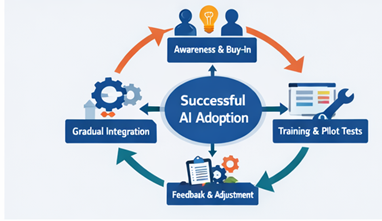
Fig 2: Change Management Lifecycle for AI Adoption
1) Change Management – Strategic Approach
- Position AI as an Advisory Layer
To gain operator acceptance, AI/ML solutions should be deployed above existing control systems, acting as advisory tools rather than direct controllers. Operators can compare AI recommendations with their own decisions, building trust gradually.
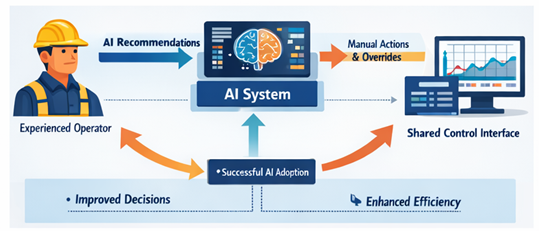
Fig 3: Operator- AI Collaboration Model on the Shop Floor
- Integrate into Existing Control Interfaces
Instead of introducing new terminals or dashboards, AI recommendations should be embedded into the existing control system user interface. Familiar environments reduce resistance and learning barriers.
- Provide a Manual Override Option
A soft switch to manual mode is essential. It reassures operators that human authority remains intact and allows fallback during unusual situations.
2) Change Management – Operational Approach
Structured Training and Knowledge Sharing
A structured operationalization program is critical. This includes:
- In-depth training for operators and line managers
- Explanation of model behavior and constraints
- Alignment with expected benefits and limitations
- Phased Online Trials
Deployment should begin with short-duration trials on lower-risk products. Performance analysis must be shared transparently with the operating team to build confidence.
- Feedback-Driven Fine-Tuning
Operator feedback should drive fine-tuning. Gradually, uninterrupted AI-based advisory or control durations can be extended across multiple shifts and days.
Conclusion
AI/ML deployment on the manufacturing shop floor is not a plug-and-play exercise. It is a journey of trust, collaboration, and structured change management.
When implemented thoughtfully, AI does not replace human expertise, it augments it, enabling stabilized operations, improved efficiency, and sustainable performance gains. The real differentiator is not the sophistication of the algorithm, but how well people are brought along in the transformation.
References
- Lee, J., Bagheri, B., & Kao, H. A. (2015). A Cyber-Physical Systems architecture for Industry 4.0. Manufacturing Letters.
- Qin, S. J., & Badgwell, T. A. (2003). A survey of industrial model predictive control technology. Control Engineering Practice.
- ISO 22400 – Key Performance Indicators for Manufacturing Operations
Related Blogs